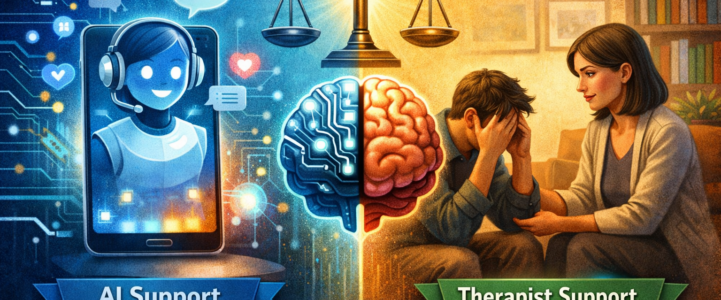
In a world where technology continues to shape the way we live, work, and communicate, it is no surprise that mental health support has also evolved. Artificial intelligence (AI) tools are increasingly being used to provide guidance, reflection, and support for individuals seeking help for mental health issues. At the same time, the roles of Registered Clinical Counsellors (RCCs), Registered Psychologists and licensed psychotherapists remain vital in offering the depth, understanding, and professional care that only human connection can provide.
Understanding when to seek help from AI-driven tools versus when to consult a mental health professional can empower you to make informed decisions about your well-being.
The Role of AI in Mental Health Support
AI chatbots and virtual assistants have become more advanced in providing emotional support, mindfulness reminders, and stress-reducing tools. These systems can offer a safe and confidential space to express how you feel, especially in moments when you need “someone” to “listen” right away.
Common mental health uses of AI include:
- Mood tracking and journaling: Encouraging self-awareness through daily reflections.
- Coping strategy suggestions: Introducing techniques such as deep breathing, grounding, or mindfulness exercises.
- Psychoeducation: Providing information about mental health topics
- Encouragement and structure: Supporting consistency in self-care activities and routines.
However, it is crucial to remember that AI cannot replace human empathy or clinical expertise. While an AI assistant can offer some comfort, and strategies, it is not equipped to conduct a clinical assessment, build a therapeutic relationship, provide a treatment plan, or handle crisis situations.
When to Reach out to a Registered Clinical Counsellor
A Registered Clinical Counsellor provides what AI cannot — deep emotional understanding, clinical judgment, and personalized treatment. Mental health professionals such as RCCs are trained to recognize mental health patterns, manage complex issues, and support long-term healing through evidence-based techniques such as Cognitive Behavioral Therapy (CBT), solution-focused therapy, psychodynamic therapy, or mindfulness-based approaches.
You should consider speaking to a clinical counsellor when:
- You feel persistently anxious, sad, or overwhelmed.
- You’re struggling to manage stress, loneliness or relationships.
- You are feeling stuck.
- You find it hard to manage daily responsibilities.
- You are unhappy in your job or career.
- You have thoughts of self-harm.
- You are engaging in harmful behaviours.
Mental Health Professionals create a confidential, supportive space where your experiences are validated and worked through with care. The process may take time, but it often leads to lasting growth and resilience.
The Best of Both Worlds: Using AI and Therapy Together
AI can serve as a connection to therapy, not a replacement. You can use AI tools for daily support and reflection, while relying on a clinical counsellor for deeper emotional healing and professional guidance. For example:
- Use an AI assistant to record your thoughts and emotions before a therapy session, helping you articulate what’s been on your mind.
- Utilize AI for mindfulness reminders or to practice relaxation techniques between sessions.
This integrated approach allows individuals to remain engaged in their growth while benefiting from the tailored expertise and guidance of a Registered Clinical Counsellor or licensed mental health professional.
Conclusion
The growing presence of AI in the mental health landscape marks an exciting advancement in accessibility and support. However, technology should be viewed as a supplement, not a substitute, for qualified professional care.
AI can provide valuable tools for managing emotions, cultivating awareness, and promoting consistency in self-care. Yet the human connection, empathy, and clinical understanding that skilled mental health professionals offer remain the foundation of true psychological healing.
By understanding the strengths and boundaries of each, you can create a balanced, informed approach to mental well-being that honors both innovation and compassion.